See more of our coverage in your search results.
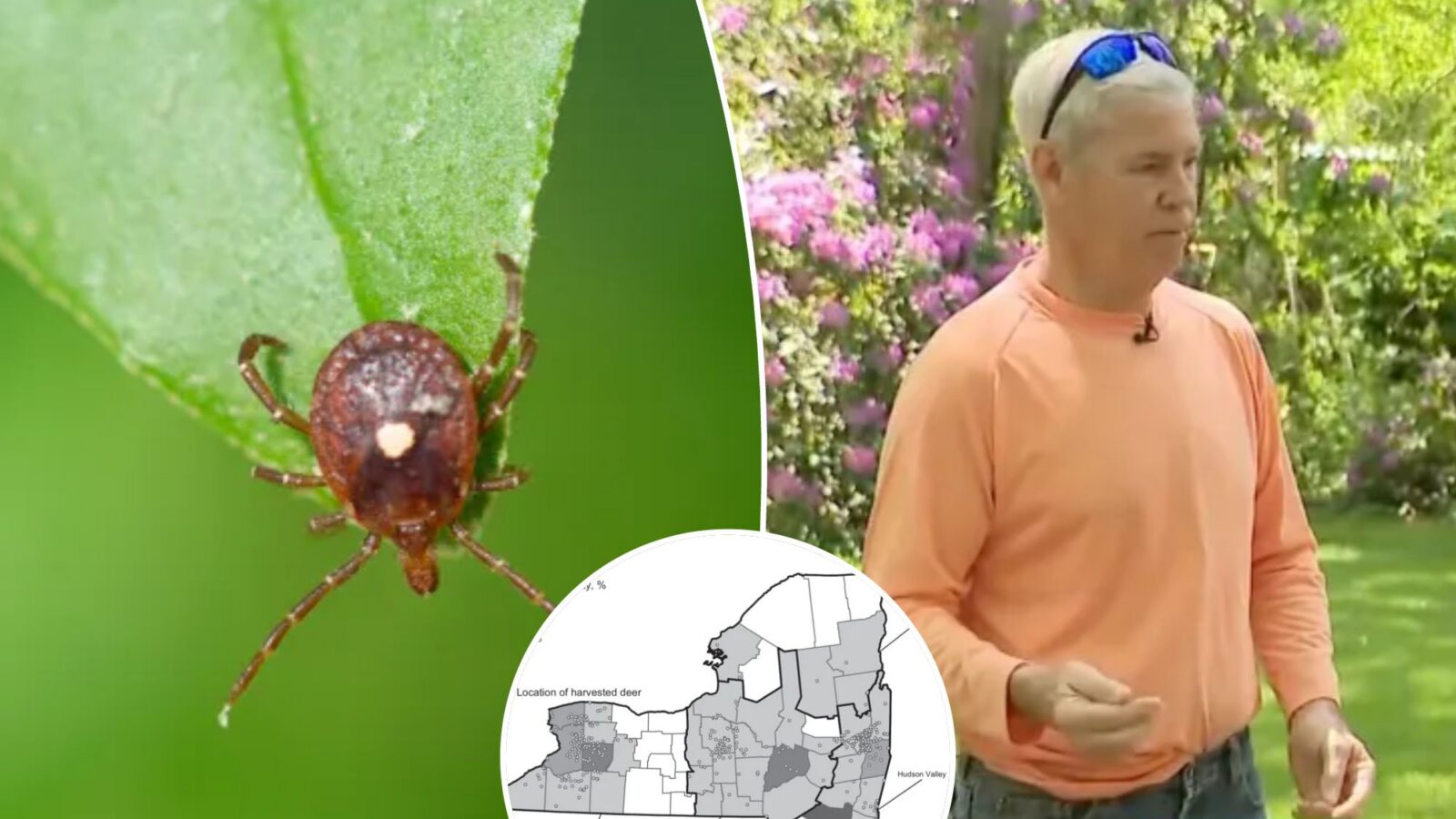
For the first time, Bourbon virus has been confirmed in New York.
The disease, which has only ever been confirmed six times, sent a 67-year-old Suffolk County man to the hospital and has killed two others.
Experts say there are likely more cases of the tick-borne virus that haven’t been identified.
That’s because many doctors aren’t aware of or looking out for it, and there is no commercial test available to diagnose it. It took five years to confirm Michael Larkin, the Suffolk County patient, had the disease.
Meanwhile, testing of ticks and deer show evidence the virus is running rampant on Long Island and around New York state.
“The Bourbon virus is likely more prevalent than we think in our region and other cases are likely not being diagnosed,” Dr. Luis Marcos, who treated Larkin, said in a press release. Marcos is also the director of Stony Brook Medicine’s Tick-borne Disease Clinic.
People infected with the virus may develop symptoms two to seven days after a tick bite. Symptoms include:
Bourbon virus can also affect the blood. It can cause low white blood cells, making it harder for the body to fight infections, and low platelet counts, making it harder to stop bleeding.
Two known cases of Bourbon virus were fatal. The first known person who caught the disease died after the virus affected his heart, kidneys, lungs and digestive tract.
This rare disease has only been confirmed in Kansas — in Bourbon County, where it gets its name — Missouri, Oklahoma, and now New York.
Two known cases of Bourbon virus were fatal. The first known person who caught the disease died after the virus affected his heart, kidneys, lungs and digestive tract.
Many of the symptoms of Bourbon virus overlap with other tick-borne illness, like Lyme disease, ehrlichiosis, and Heartland virus disease.
It’s not possible to identify the disease for sure without a pathogen-specific molecular test, or serologic testing.
Molecular testing uses a PCR test to look at blood while the infection is happening to find genetic material from the virus. Serologic tests look at antibodies, which the blood naturally makes in response to the virus.
Larkin’s case was identified by serologic testing. Both tests are extremely specialized and may require sending samples to the state department of health or the CDC.
Currently, there are no antiviral medications for Bourbon virus.
At the hospital, doctors might manage symptoms only, giving patients IV fluids for hydration and meds for fever and pain.
Bourbon virus can easily be misidentified as another tick-borne illness, like Lyme disease. If this happens, the patient may be given antibiotics, which is does nothing for a virus like Bourbon.