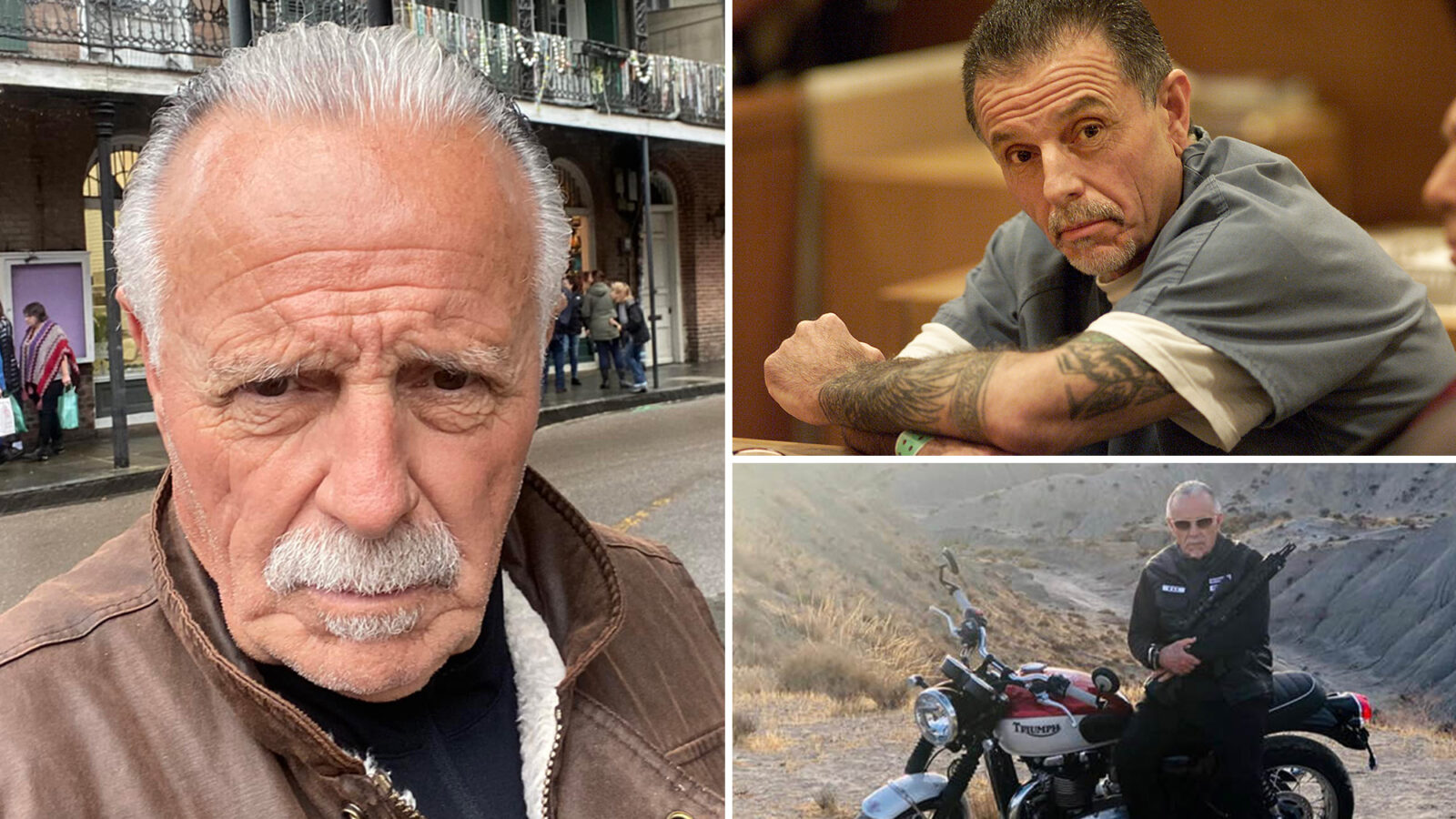
George Christie can recall the moment he decided to exit the Hells Angels.
“I walked into the outlaw motorcycle life because it was a live and let live society,” the former club leader told Fox News Digital. “A lot of things had changed. I walked into the meeting, and I told everybody what I was going to do. It was a very difficult decision. I said we have become the people we rebel against, and I’m walking away. It’s time for me to move on.”
“I thought, foolishly, that I would be able to walk away because of my position in the club and the 40 years I had given to them,” Christie admitted. “But the bottom line is you’re either in or you’re out.”
Christie is sharing his account in a new A&E series, “Secrets of The Hells Angels,” which examines the history of the notorious biker club. It features new interviews with former chapter presidents, as well as law enforcement officials, undercover agents and victims.
The 77-year-old resigned his presidency of the Ventura chapter and left the club in 2011. Christie said he became disillusioned by the club, which had transformed from a brotherhood to an all-out war, fighting every major outlaw bike club in the United States – as well as law enforcement.
According to Christie, he was immediately excommunicated by the men he once called brothers. Members were restricted from ever speaking to him again, he claimed.
“I miss the camaraderie, the brotherhood,” Christie explained. “I miss the good times. I even miss the bad times. But I’m a realist. I don’t live in the hypothetical world. It is what it is. I gave them 40 years of my life. I walked away when I thought it was an appropriate time to do so. And I think I am where I’m supposed to be in life right now.”
The organization has a long history in California, dating to its founding in 1948 by returning World War II veterans in the dusty town of Fontana. It includes a notorious incident during a Rolling Stones show in Altamont in 1969 in which a spectator was stabbed by a Hells Angel working security. A jury later acquitted the killer, finding he had acted in self-defense.
“I miss the camaraderie, the brotherhood,” Christie explained. “I miss the good times. I even miss the bad times. But I’m a realist. I don’t live in the hypothetical world. It is what it is. I gave them 40 years of my life. I walked away when I thought it was an appropriate time to do so. And I think I am where I’m supposed to be in life right now.”
The organization has a long history in California, dating to its founding in 1948 by returning World War II veterans in the dusty town of Fontana. It includes a notorious incident during a Rolling Stones show in Altamont in 1969 in which a spectator was stabbed by a Hells Angel working security. A jury later acquitted the killer, finding he had acted in self-defense.
Federal, state and local police have pursued the club for decades, infiltrating it with undercover agents, prosecuting suspects with harsh charges once reserved for the Mafia and indicting members on charges ranging from drug trafficking to mortgage fraud.
Still, the club has flourished over the years. It has gone on to open chapters worldwide and aggressively enforce its trademarks in court. It has also won high-profile acquittals and other legal battles with law enforcement.
As an only child to a family of Greek immigrants in Ventura, Christie grew up fascinated with motorcycles. Despite his father’s objections, he bought his first bike, a 1957 Panhead, for $200 in 1966. He soon found himself hanging out at local clubs.
Still, the club has flourished over the years. It has gone on to open chapters worldwide and aggressively enforce its trademarks in court. It has also won high-profile acquittals and other legal battles with law enforcement.
“I think America has a romance with outlaws – they always have, and they always will,” he explained. “As a young kid, I always identified with the outlaw guys. And when I got out of the Marine Corps, I was still looking for that camaraderie. I drifted into the outlaw motorcycle world and ultimately wound up riding with the Angels.”
Christie became a full-patch Hells Angel in the Los Angeles chapter in 1976. Six months later, he became president before becoming a club leader of the Ventura Chapter in 1978.
“What you have to do is make your presence known,” Christie explained about what it takes to join the Hells Angels. “Back in the ‘60s when I started, you had to build your custom motorcycle. It becomes an extension of your personality. If you had a cool-looking motorcycle, the majority of these guys would think you were probably a pretty cool guy. That’s how I established myself. My bike was an extension of myself. This may sound abstract to some people, but it was a work of art for me.”
The Angels have always maintained that they are a club of motorcycle enthusiasts who are unfairly regarded as an organized crime syndicate because of the crimes of a few members acting independently. The club participates in charity events, such as “Toys for Tots,” motorcycle runs and blood drives.
Morning Report delivers the latest news, videos, photos and more.
Please provide a valid email address.
By clicking above you agree to the Terms of Use
and Privacy Policy.