Δ
Thanks for contacting us. We’ve received your submission.
The resignation of Harvard president Claudine Gay over allegations of plagiarism and her disastrous response to antisemitism turns the spotlight on the university’s governing body — the Harvard Corporation.
The 12-member board is led by the billionaire Hyatt hotel scion Penny Pritzker, a former Obama administration commerce secretary, who has vowed to stay on despite Gay quitting.
Harvard itself is facing investigation by the House of Representatives‘ Committee on Education and the Workforce into the plagiarism scandal and how the school handled it.
The university says it was first alerted to allegations that Gay took other academics’ words and used them as her own by The Post in late October when we approached its spokesman Jonathan Swain for comment during our reporting.
But what it did next — threaten The Post in a 15-page bullying letter from bare-knuckle law firm Clare Locke and clear Gay before investigating her — leaves a series of unanswered questions about the university’s most important governing figures.
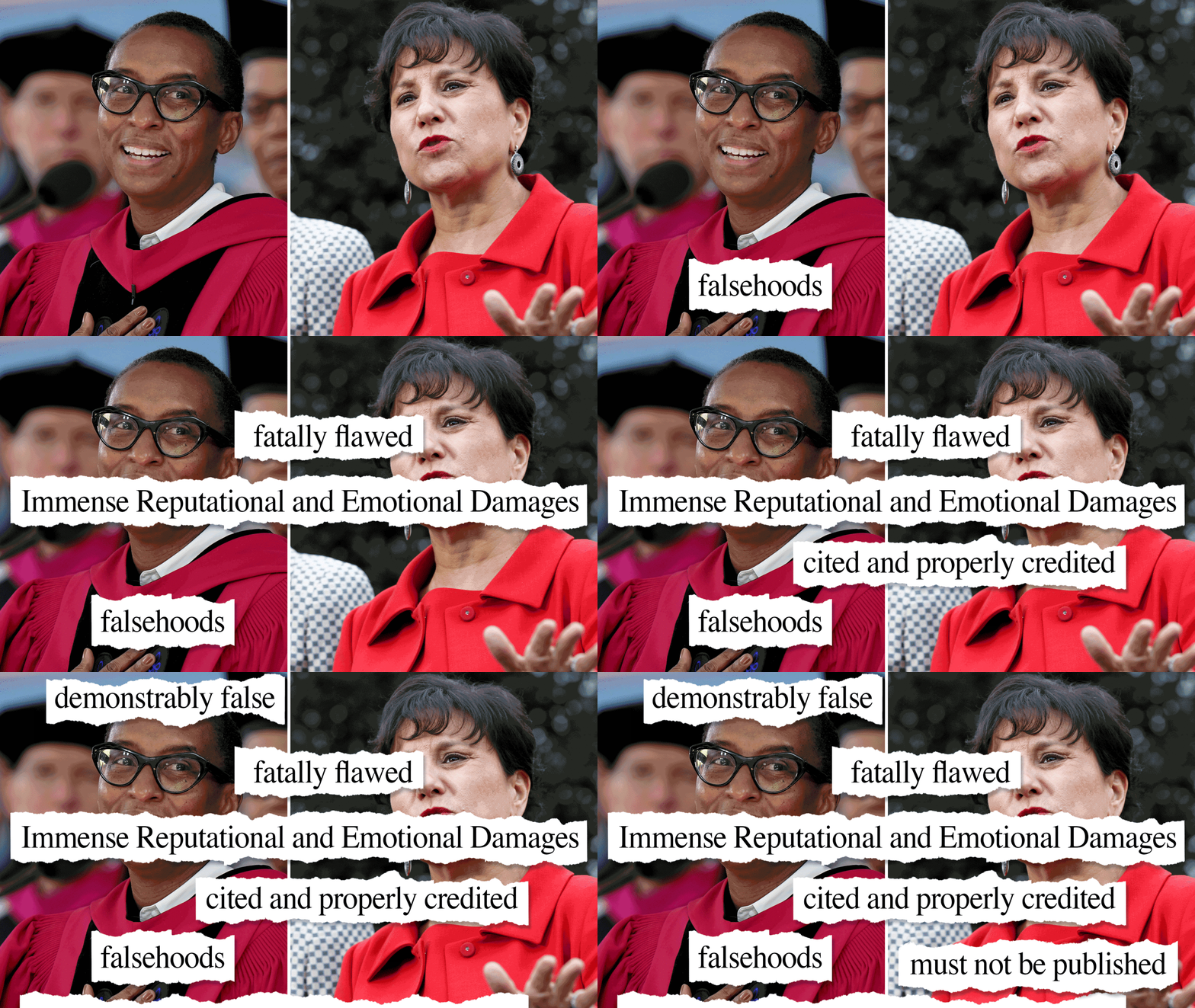
In Harvard’s lawyers’ letter to The Post on October 27, the university demanded that allegations that Gay was a plagiarist “must not be published” and threatened legal action to find the anonymous whistleblower who approached The Post to raise their concerns.
It also claimed that Gay’s work was “cited and properly credited,” and that allegations of copying were “demonstrably false” — all within 72 hours of The Post asking for comment.
Less than two weeks later, on November 7, the university’s lawyers said: “We have conclusively rebutted (with evidence) all the false allegations of plagiarism that have been presented to date.”
But the corporation has still not explained how it rushed to that conclusion, and who decided that Gay was innocent.
On November 3, the Harvard Corporation did start some kind of investigation, but entirely in secret.
Four members of the 12-person corporation formed a special committee to decide what to do about the allegations — but their identities have never been disclosed.
On November 3, the Harvard Corporation did start some kind of investigation, but entirely in secret.
That committee appears to be who decided to ditch Harvard’s normal rules on dealing with plagiarism allegations against faculty members, which the corporation later said would have been a conflict of interest because the body which would carry it out reports to the president — at the time, Gay herself.
The corporation then asked three outside “distinguished political scientists” who had “no affiliation” with Harvard. Their identities and the methods they used to investigate Gay have also never been disclosed.
But on December 12, the college issued a long statement defending Gay and once again cleared her of plagiarism — without saying what the three outside political scientists found.
Instead it said: “On December 9, the Fellows reviewed the results, which revealed a few instances of inadequate citation.”
And it said “the analysis found no violation of Harvard’s standards for research misconduct,” but did not explain how that conclusion was reached.
The corporation said it had to go to a secret star chamber of outside political scientists and not use the usual method of investigating plagiarism claims because of “the potential for the appearance of a conflict of interest, because these offices ultimately report to the President.”
But that conflict no longer exists: Gay is once again an ordinary member of the faculty.