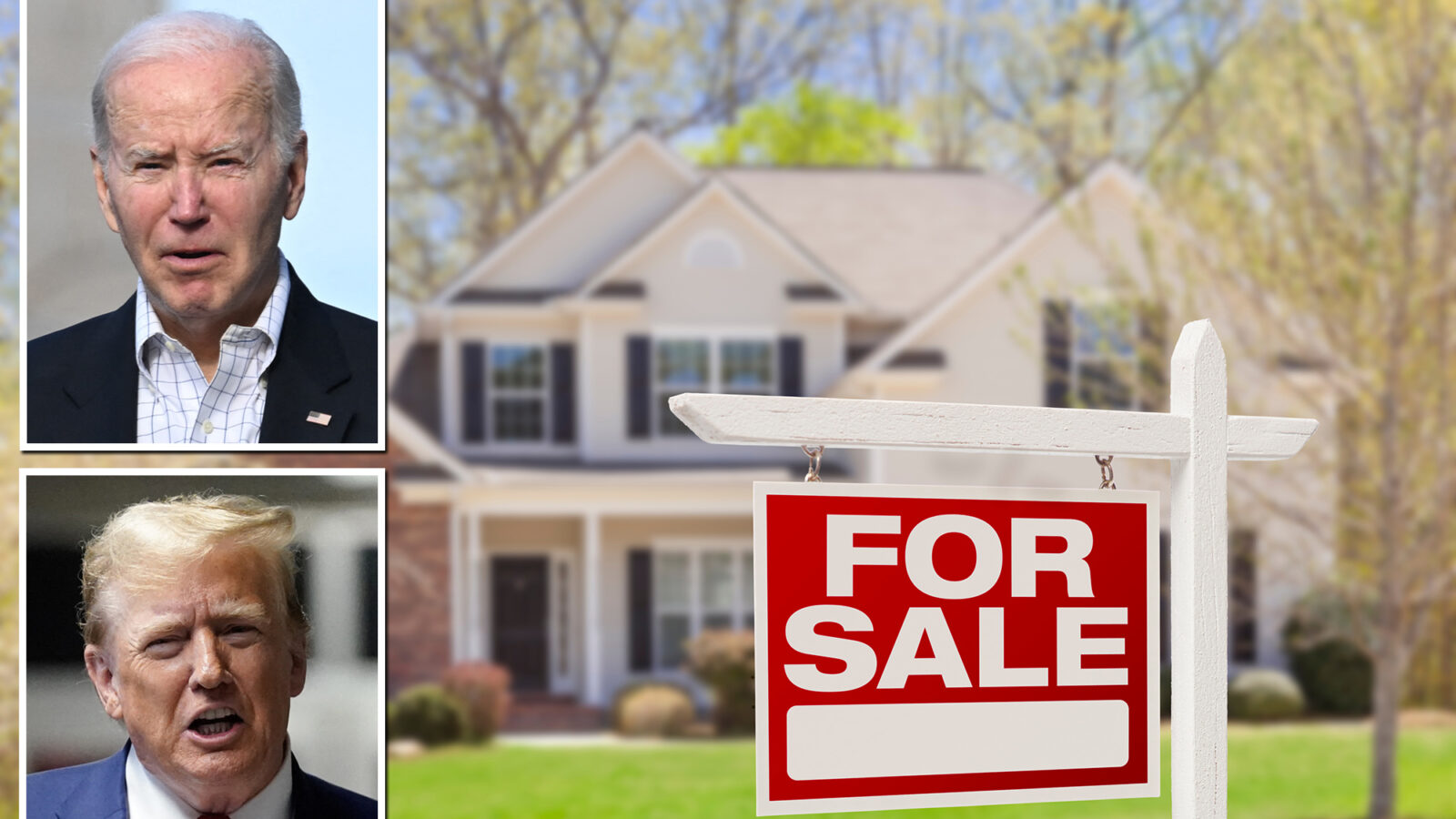
In most presidential election years, home prices aren’t a key issue for voters or a major campaign talking point.
Consider it another way in which the 2024 election is anything but typical. With mortgage rates up and home prices out of reach for many first-time buyers, the affordability crisis is increasingly in the spotlight as campaign season heats up.
In March, President Biden delivered a speech on home prices in the key swing state of Nevada after proposing a $10,000 tax credit for first-time buyers and those selling their starter homes.
Donald Trump fired back in a campaign video, accusing Biden of “waging full-scale war on the suburbs” that would decimate home values by expanding affordable housing options.
In addition to Nevada, the election will come down to just six other swing states: Arizona, Georgia, Michigan, North Carolina, Pennsylvania, and Wisconsin. Trump won all of them but Nevada in 2016, while Biden carried all but North Carolina in 2020. Neither candidate can win this year’s election without taking at least three of the swing states, unless the electoral map changes dramatically before November.
The debate comes as housing affordability reaches some of the most abysmal levels on record. Nationally, median list prices are up 28% since January 2021, and the home price-to-income ratio is at a record high of nearly 6-to-1, up from a ratio of 4.1-to-1 as recently as 2019.
The cost burden for renters is also alarmingly high, with nearly half of all renters in the nation spending more than 30% of their income and a quarter spending more than 50% on rent each month, according to U.S. Census data. Those sky-high rental burdens can make it difficult to impossible for many renters to save up for a down payment on their first home.
“Homeownership has for many years been an important part of the American dream, and if people feel like that’s slipping out of reach, we’re going to see that reflected in their attitudes about the election,” says Realtor.com® Chief Economist Danielle Hale.
“If people feel like the market itself is not able to meet their needs, then it’s not surprising to see them look to politics to try to find a solution,” she adds.
Earlier this year, Biden used his State of the Union address to reveal an ambitious slate of proposals aimed at reducing housing costs. They included a two-year tax credit of $5,000 per year for first-time homebuyers, with a similar one-year $10,000 credit to those selling their first home to trade up.
“I know the cost of housing is so important to you,” Biden said during the annual address to a joint session of Congress. “If inflation keeps coming down, mortgage rates will come down as well. And the Fed acknowledges that, but I’m not waiting.”
Biden is also proposing various tax credits and spending programs that the administration says could finance the building or renovation of 2 million homes.
“Many of these proposals will need to make their way through Congress first—a particularly arduous task in an election year—though their inclusion in the address underscores the salience of the skyrocketing cost of housing for Americans nationwide,” Moody’s associate economist Nick Luettke wrote in a note on Biden’s speech. “Housing affordability has become a key issue for Americans spanning all demographics and political divides.”
Biden is also proposing various tax credits and spending programs that the administration says could finance the building or renovation of 2 million homes.
However, Biden’s proposed tax credit for first-time homebuyers has come under scrutiny from some economists, who warn it could push home prices higher by turbocharging demand. Those critics warn that by subsidizing home purchases, the tax credits could draw more buyers into a market already struggling with low inventory, sparking bidding wars and price increases.
“I’m glad we’re having the policy discussion, but it seems like so many of the solutions offered by his administration are focused on the demand side, when supply side is where we need to really pick up steam,” says Nicholas Irwin, associate professor of economics and real estate at the University of Las Vegas.
“I don’t think by helping to subsidize the demand side, we’re going to fix the issue of house prices going up,” he adds. “We need to build more houses to account for the fact people want to live in houses.”
On the other hand, Biden’s proposed tax credit for sellers could boost available inventory by nudging homeowners to trade up, argues Alex F. Schwartz, a professor of urban policy at The New School and chair of the master’s program in public and urban policy at the university’s Milano School of Policy, Management, and Environment.
“This recognizes that there is sort of a logjam, with people who are not very interested in putting their house units on the market because of the fact that they’re at a very favorable interest rate, and they’re not going to be able to get that rate when they buy another unit,” he says of the tax credit for sellers. “So this would help lubricate that a bit.”
Presumptive Republican nominee Trump, who first gained fame as a real estate tycoon, is veering in the opposite direction by claiming that Democrats’ efforts to boost home affordability amount to a “war on the suburbs.”
“The woke left is waging full-scale war on the suburbs, and their Marxist crusade is coming for your neighborhood, your tax dollars, your public safety, and your home,” Trump said in a recent campaign video. “They will use the power of the federal government to abolish zoning for single-family homes, destroy your property values by building giant multifamily apartment complexes in the suburbs, and even next to your house.”