Only a day earlier, Churchill’s daughter Nili, 41, returned home from Gaza as part of the seventh tranche of released hostages in the temporary truce deal brokered with Hamas.
More than a quarter of Nir Oz’s 427 residents were either murdered or kidnapped on Black Shabbat, as it is known locally.
Of those, 31 are still in captivity in Gaza, including Kfir Bibas, the red-haired baby who, at 11 months old, has become a symbol of the hostage crisis as the youngest abductee.
The IDF announced last week that seven hostages had died while in captivity, four of whom — including Margalit — were from Nir Oz.
Life goes on for Margalit’s cowshed and on the day that his death was announced, a new calf was born.
The freshly delivered bovine isn’t the only sign of new life emerging from the devastation.
Last week saw new potato saplings planted and avocado harvests with volunteers from across Israel arriving at the fields to lend a hand.
The once-bucolic kibbutz, which lies only a mile from the border with Gaza, has 6 acres of farmland and is known for its potatoes, pomegranate, wheat, and peanut exports.
An oasis of green in the arid climes of the western Negev desert, the kibbutz is an ecological marvel and home to 900 species of flora.
Since the onset of the Second Intifada in 2001, Nir Oz — which was established in 1955 — has been plagued by rocket and mortar attacks from Gaza.
These attacks intensified significantly in both number and frequency after Israel withdrew from Gaza in 2005 and Hamas subsequently took over the Strip in a bloody coup.
Still, kibbutz residents say that it was a price they were willing to pay for what they believed was a patch of heaven on earth.
“It was 99% paradise and 1% hell,” Benny Avital, a member of Nir Oz’s rapid response team, told The Post outside a row of burned-out houses on the kibbutz. “They [fire rockets] at us, we escape with the kids, sometimes for a few days or a couple of months, and then we come back and have quiet for a bit.
Still, kibbutz residents say that it was a price they were willing to pay for what they believed was a patch of heaven on earth.
“But after that Saturday, it’s 1% paradise and 99% hell.”
Each of the nearly 20 communities targeted in the Oct. 7 massacre experienced the attack differently, leading to varied responses and differing perspectives about both rehabilitation and the possibility of returning.
In the case of Nir Oz, IDF forces took hours to arrive, leaving the terrorists to carry out an extended, systemic strategy of killing on sight, home invasions, and attempts to breach safe rooms.
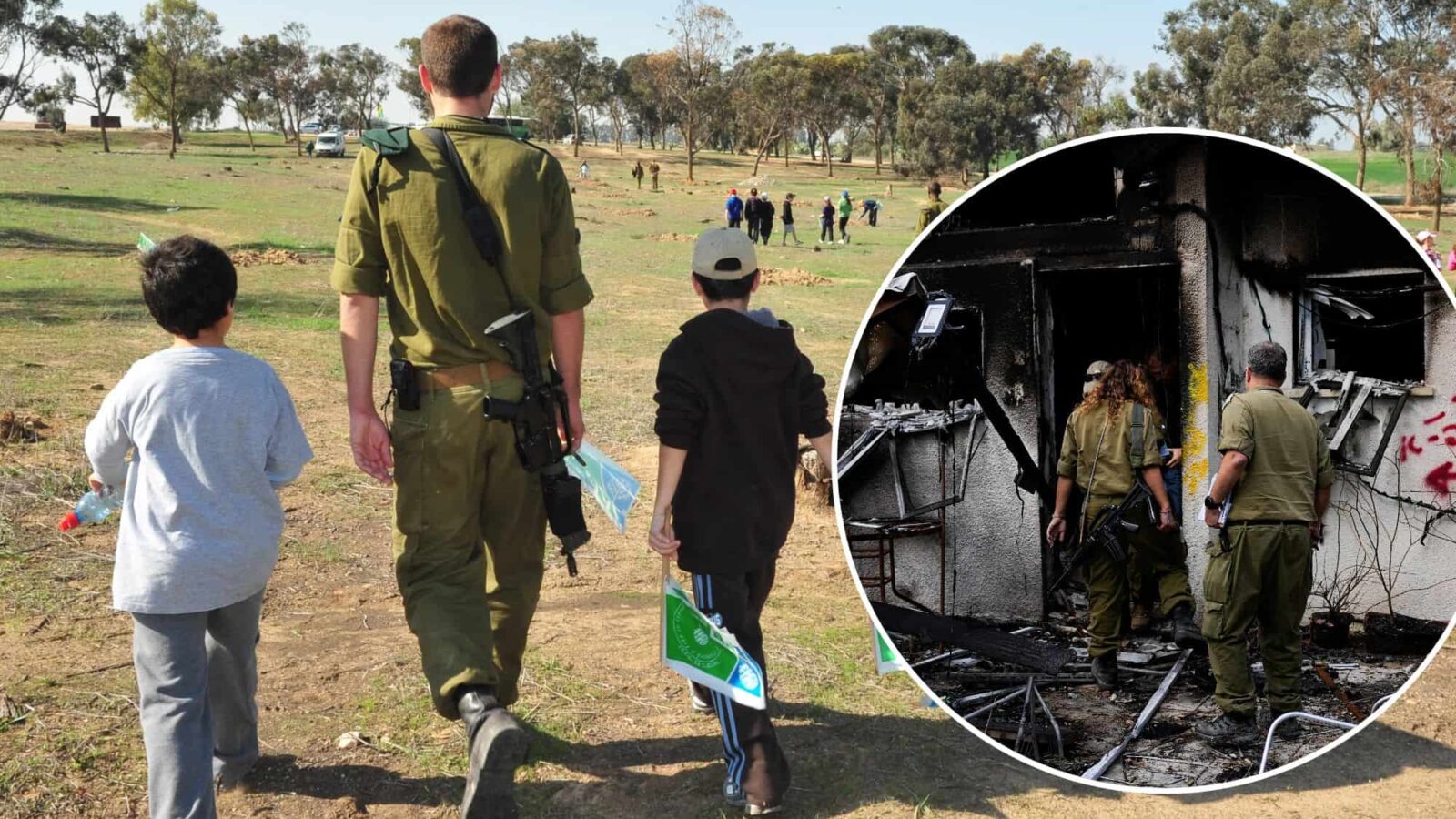
When, in some cases, those attempts failed, terrorists set fire to Nir Oz homes, leaving residents with a terrible choice: face suffocation or confront the attackers.
According to Avital, who threw a wet towel on his head and ran into houses rescuing several dozen survivors, of the 700 Palestinians to enter the Kibbutz that day, only 150 were actual armed militants.
The rest were civilian men, women and children.
It later emerged that some of those civilians had taken kibbutz members hostage.