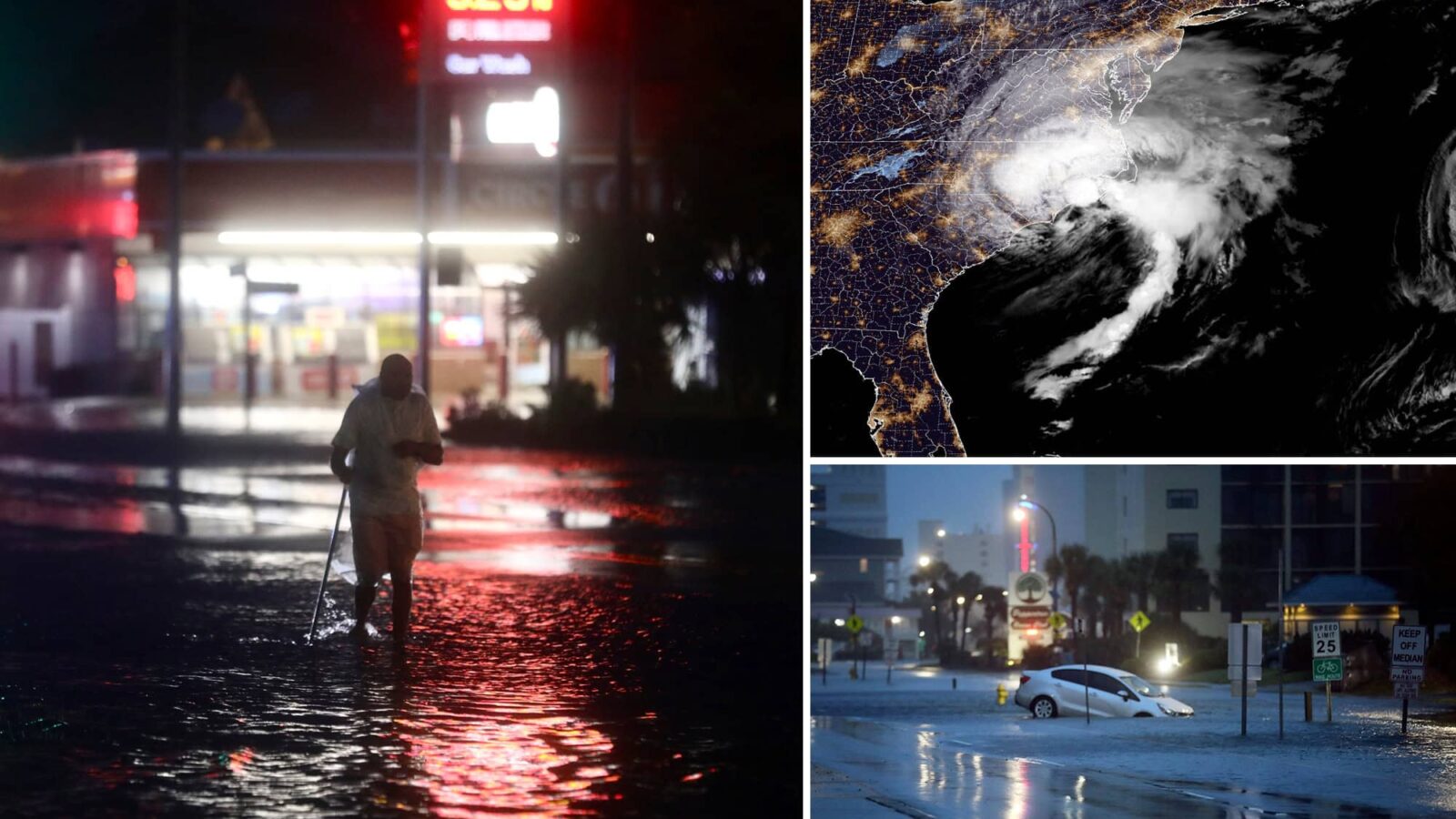
After slamming into Florida with 125 mph winds and flooding homes, Tropical Storm Idalia breached South Carolina sea defenses and sent tides surging to new records, leaving streets flooded in its wake.
The storm reached the Palmetto State late Wednesday night, after making landfall earlier in the day in Florida’s Big Bend region. It has since been attributed to at least three deaths in Florida and Georgia.
Idalia had been downgraded from a Category 3 hurricane to a tropical storm as it made its way north from Florida, through Georgia and into South Carolina throughout the day – but its arrival in the state coincided with a king high tide, resulting in a breach of Charleston’s famed Battery district, which is known for its antebellum homes.
Water was knee-high along streets lining the area.
Almost 30,000 people throughout the state remained without power in South Carolina Thursday morning, as Idalia moved north.
Meanwhile, more than 100,000 Georgia residents and nearly 150,000 Floridians reported their power was still out as crews in those states began clean-up efforts.
Idalia had made landfall at Keaton Beach in Florida at around 7:45 a.m. Wednesday, bringing with it 125 mph winds.
After pummeling Florida and Georgia with heavy winds and torrential rain, the center of the storm moved to just about 20 miles southwest of Myrtle Beach, South Carolina Wednesday night.
As it arrived, the tide level in Charleston Harbor reached over 9.23 feet, according to the National Weather Service – making it the fifth highest peak tide since records began in 1921. Warnings had been in place for storm surges of up to four feet.
The tempest had been downgraded to a tropical storm at that point, but was still generating 60mph winds.
Those strong gusts forced two drifting boats, a sailboat and a blue houseboat, to collide with the U.S. -17 bridges connecting downtown Charleston to West Ashley, the Post and Courier reported.
Police Capt. Jason Bruder said it was aware that multiple boats had been reported floating in the Charleston waterways, but said the police department could not deploy its own watercraft until conditions calmed down.
The Department of Natural Resources is in charge of recovering loose boats and would take the lead on recovering them, he added.
Police Capt. Jason Bruder said it was aware that multiple boats had been reported floating in the Charleston waterways, but said the police department could not deploy its own watercraft until conditions calmed down.
Earlier on Wednesday, a tornado ripping through South Carolina ahead of the storm surge flipped a car onto its roof, leaving two people with minor injuries.
The black sedan was driving through torrential rain near Goose Creek, on the outskirts of Charleston, shortly after 2:30 p.m. when the twister lifted the car’s two back wheels and spun it on its hood.
Soon, the car’s front two wheels were also in the air before the car came crashing down on top of another vehicle.
Still, state officials say they were spared the brunt of Idalia’s wrath.
The National Weather Service lifted the tropical storm and storm surge warnings for much of the South Carolina coastline, including Charleston and communities farther south, at 2 a.m. Thursday. But as of 5 a.m., Myrtle Beach and the Grand Strand remained under both warnings until later in the day.
The situation was far worse in northern Florida, where one resident said “all hell broke loose.”
Belond Thomas, of Perry – a small town just inland from Big Bend – said she and her family fled to a local motel, thinking it would be safer than riding out the storm at home.