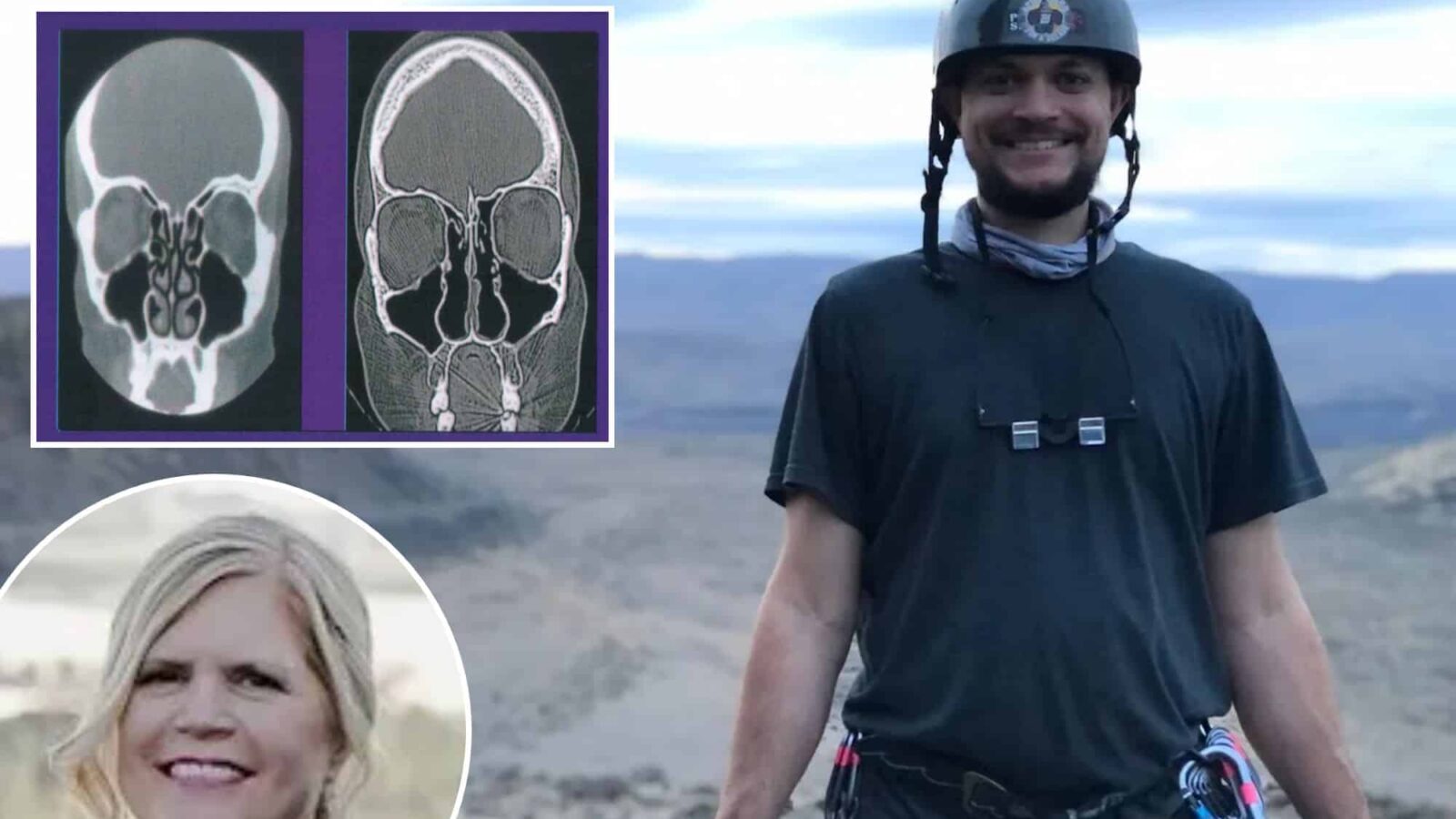
Chris Supalla, tossing and turning with a stuffy nose, was advised by several doctors that a simple nasal surgery could help him get some rest — but afterward, he lost more than sleep.
“He was gasping for breath,” his mother, Mary Supalla, told The Post of her son’s waking nightmare. “He felt like a plastic bag was over his head.”
Chris, 32, killed himself three months later.
“I’m so sorry to leave this way, but the suffering is too great,” Chris wrote in his suicide note. “My nose feels so empty I can’t feel anything at all. I love you always . . . Please send first responders to recover me from the forest in the back. You do not need to see what happened.”
The Portland, Oregon native’s 2021 death certificate reads “asphyxia due to ligature hanging,” with Empty Nose Syndrome as a “significant” contributing condition.
Nearly 30 years after it was first identified, ENS is finally gaining greater recognition. The first medical textbook on the frightening condition was published this year by distinguished physician Dr. Eugene Kern, a professor of otorhinolaryngology at the University at Buffalo.
In the early 1990s, while working at the Mayo Clinic, Kern was alarmed after two post-surgery patients from elsewhere told him they felt suffocation with every breath. Both later killed themselves.
Other patients compare that sickening feeling to being drowned, smothered or waterboarded. “These patients are nasal cripples,” Kern, 86, declared. They can barely sleep, jerking awake as the body senses it is not breathing, although it is. Mouth breathing doesn’t help.
Kern wants his book to “shine a light on an area where people have suffered mightily,” he said. “I saw the suffering.”
ENS is a complication of any nasal surgery that affects the turbinates — cylindrical structures in the nose that regulate incoming air. Turbinate reduction is sometimes an add-on to septoplasty for a deviated septum, or even a regular nose job.
“I had no idea what a turbinate was,” said David Troutman of Indiana, who had surgery six years ago for sleep apnea. “I trusted my doctor.”
After his surgery, Troutman was exhausted, unfocused, endlessly pacing — so listless and restless that his boss drove him to the emergency room. “I was a shell of myself,” he said. “My personality was just gone.”
Troutman, 54, now moderates an Empty Nose Facebook group, filled with “difficult stories to read,” he said. “I anticipate that I have a lifelong struggle ahead of me. There was no relief, no reprieve.”
After his surgery, Troutman was exhausted, unfocused, endlessly pacing — so listless and restless that his boss drove him to the emergency room. “I was a shell of myself,” he said. “My personality was just gone.”
The group, with around 3,700 members, has recorded 14 suicides in the past six years, with some memorialized on the Nasal Cripple website, a collection of media mentions.
The agonizing condition remains a mystery. Incidence is unknown, and it’s unclear who’s susceptible. Some people are fine when turbinate tissue is removed; others face a lifetime of torture.
A handful of doctors in the US will attempt treatment, which includes assorted methods to moisturize the nose or alter the airflow.
“If you take a turbinate out, you can get a post-traumatic neurogenic-type pain, which is horrible,” Kern told the Post. “Some people have enough compensatory functional capacity that will help them along without symptoms for two or five or even 10 years. There is no test to determine nasal function.”
Chris Supalla, who worked in accounting, consulted with three doctors before surgery, his mother said. He had a septoplasty and microablation, and the doctors said they removed just 1 millimeter of turbinate tissue. “Chris asked about ENS and was worried about it,” she said. “The doctors were familiar with ENS but said, ‘I haven’t seen it.’ They reassured him.”
Advertisement
After his death two and a half years ago, his parents requested that the hospital, Oregon Health & Science University, warn patients about the risk of ENS.