Δ
Thanks for contacting us. We’ve received your submission.
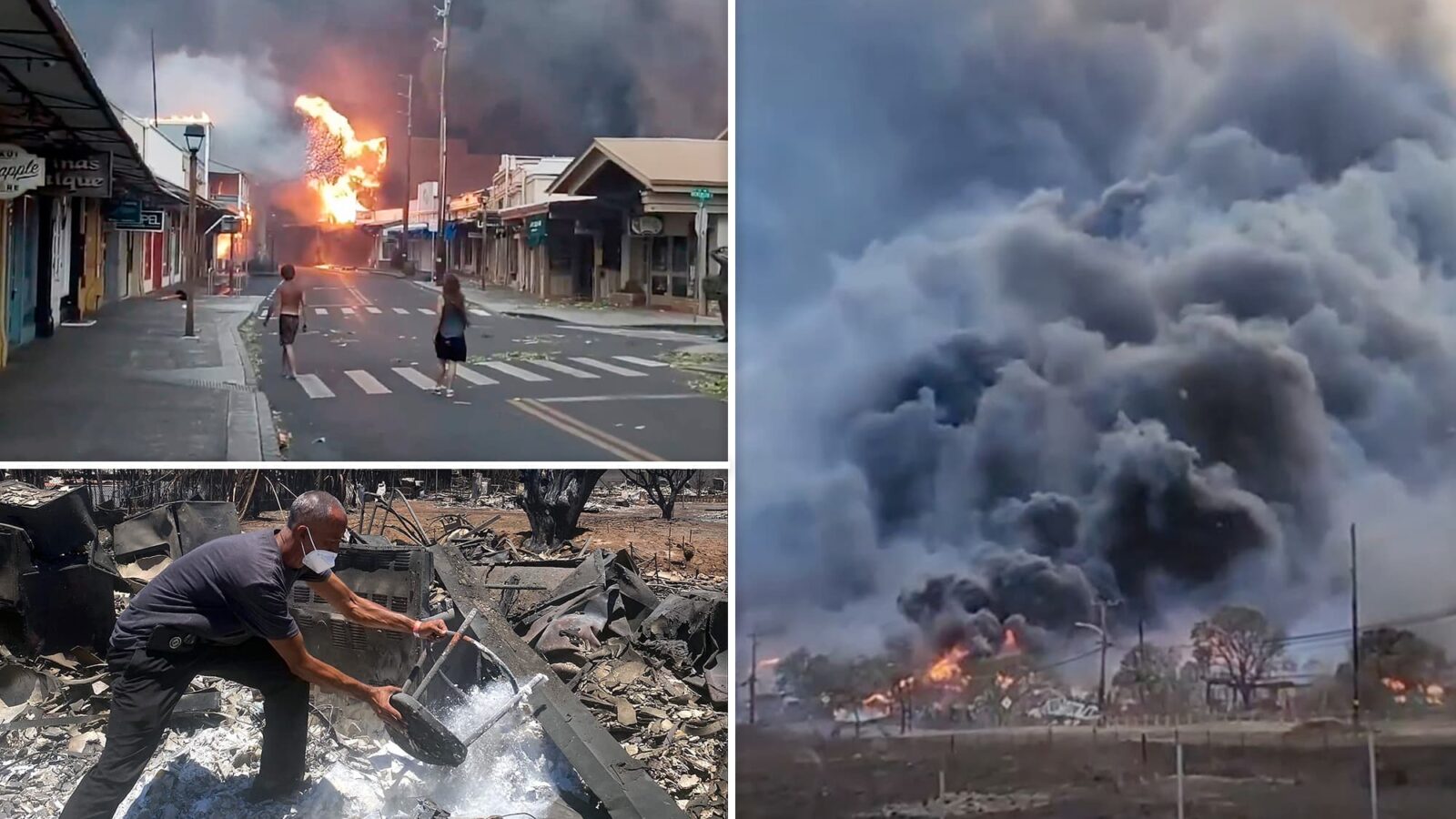
The deadly Maui wildfires have released toxic chemicals into the air and water that could pose serious, long-term health risks — and force most residents back into wearing masks, according to health officials.
The ash and dust from the thousands of burned buildings may contain harmful chemicals like lead and asbestos — and the fires may have even disturbed arsenic once used in herbicides, according to Hawaii health officials.
The hard-hit community of Lahaina is especially at risk because many of its historic buildings were built before asbestos was phased out in the 1970s, NBC News noted.
“Things like lead and asbestos are sort of top of the list,” Hawaii’s state toxicologist, Diana Felton, told the outlet.
“Those are things that are in paint, in buildings, and then do not really get destroyed with burning, so they’re now in the ash and the dust,” she explained.
The fires also may have disturbed arsenic that remains in the soil from when it was used in herbicides on parts of the island in the early 20th century, Felton said.
Arsenic, she said, binds tightly to the dirt, so it is likely in the dust and ash that continues to rain down on much of the island after the blaze killed at least 99 people and decimated at least 2,200 buildings, most of them residential.
The Hawaii Department of Health is also warning locals to again wear pandemic-style N95 masks.
“Cloth masks only partially protect you from ash,” warned the department, with locals telling NBC that more than 5,000 have been delivered to Maui residents and those in evacuation shelters.
“Instead, DOH recommends wearing a tight-fitting respirator mask … N95 masks are best but paint, dust, and surgical masks can also be used during clean-up.”
The department is also working to obtain disposable protective suits for people to wear over their clothes in the hardest-hit areas, NBC said.
“Instead, DOH recommends wearing a tight-fitting respirator mask … N95 masks are best but paint, dust, and surgical masks can also be used during clean-up.”
In an interview with CBS News on Sunday, Hawaii Gov. Josh Green said the fire in the historic town of Lahaina burned so hot, it mangled metal.
The intensity of the inferno puts Lahaina and surrounding areas at additional risk for volatile organic compounds — large groups of chemicals that increase the likelihood of cancers, cognitive impairments and birth defects — that enter the air when rubber, metal or plastic is incinerated, NBC said.
Once inhaled, the particles can enter the lungs and, in some cases, the bloodstream.
“There are probably a fair number of people who had these exposures” in Maui, said Dr. Anthony Gerber, a pulmonologist at the Office of Research Innovation at National Jewish Health in Colorado.
The County of Maui Department of Water Safety also issued an unsafe water alert over the weekend for parts of Upper Kula and Lahaina. It warned residents not to drink or boil water, as it may contain benzene and other volatile organic chemicals.
The county even cautioned survivors to avoid swimming pools and hot tubs, to wash clothes with cold water, and limit showering and bathing to lukewarm temperatures in well-ventilated areas.
Testing on the water will specifically look for volatile organic compounds as well as semivolatile organic compounds, Felton told NBC.