The Army goggles would have made it difficult to see the plane’s colored lights, which might have helped the Black Hawk determine the plane’s direction.
The goggles also limited the pilots’ peripheral vision as they flew near Ronald Reagan Washington National Airport.
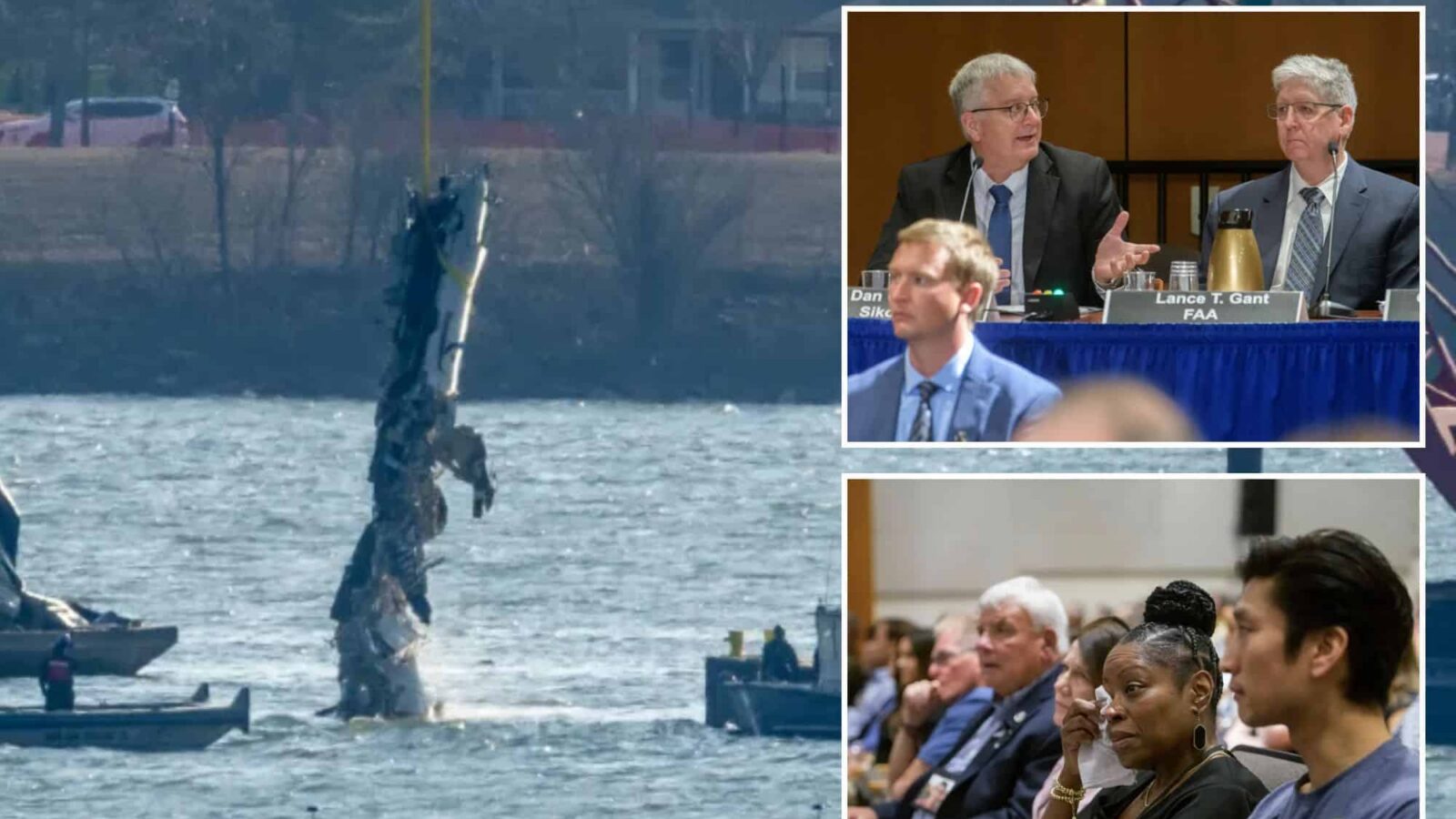
The challenges posed by night-vision goggles were among the topics discussed at the NTSB’s third and final day of public testimony over the fatal midair crash, which killed all 67 people aboard both aircrafts.
Experts said another challenge that evening was distinguishing the plane from lights on the ground while the two aircraft were on a collision course.
Plus, the helicopter pilots may not have known where to look for a plane that was landing on a secondary runway that most planes didn’t use.
“Knowing where to look. That’s key,” said Stephen Casner, an expert in human factors who used to work at NASA.
Two previous days of testimony underscored a number of factors that likely contributed to the collision, sparking Board Chairwoman Jennifer Homendy to urge the Federal Aviation Administration to “do better” as she pointed to warnings the agency had ignored years earlier.
Some of the major issues that have emerged so far include the Black Hawk helicopter flying above prescribed levels near the airport as well as the warnings to FAA officials for years about the hazards related to the heavy chopper traffic there.
It’s too early for the board to identify what exactly caused the crash.
A final report from the board won’t come until next year.
But it became clear this week how small a margin of error there was for helicopters flying the route the Black Hawk took the night of the nation’s deadliest plane crash since November 2001.
The American Airlines jet arrived from Wichita, Kansas, carrying, among others, a group of elite young figure skaters, their parents and coaches, and four union steamfitters from the Washington area.
The collision was the first in a string of crashes and near misses this year that have alarmed officials and the traveling public, despite statistics that still show flying remains the safest form of transportation.
The American Airlines jet arrived from Wichita, Kansas, carrying, among others, a group of elite young figure skaters, their parents and coaches, and four union steamfitters from the Washington area.
NTSB members scolded FAA officials during Friday’s hearing, accusing them of saying the right things about safety in public while failing to cooperate in private. They said the FAA has repeatedly refused to provide information requested by investigators.
Board member Todd Inman said there was “significant frustration between what’s actually occurring” and “what’s being said for public consumption.”
Frank McIntosh, the head of the FAA’s air traffic control organization, said he would start working immediately to remove those barriers. McIntosh also acknowledged problems with the culture in the tower at Reagan National, despite past efforts to improve compliance with safety standards.
“I think there were some things that we missed, to be quite honest with you, not intentionally, but I was talking about how certain facilities can drift,” McIntosh said.
Tim Lilley, an aviation expert whose son Sam was a pilot on the passenger jet, said he’s optimistic the tragic accident will ultimately lead to some positive changes.
“But we’ve got a long way to go,” he told The Associated Press.
Lilley said he was particularly struck by the FAA’s lack of alcohol testing for air traffic controllers after the crash.