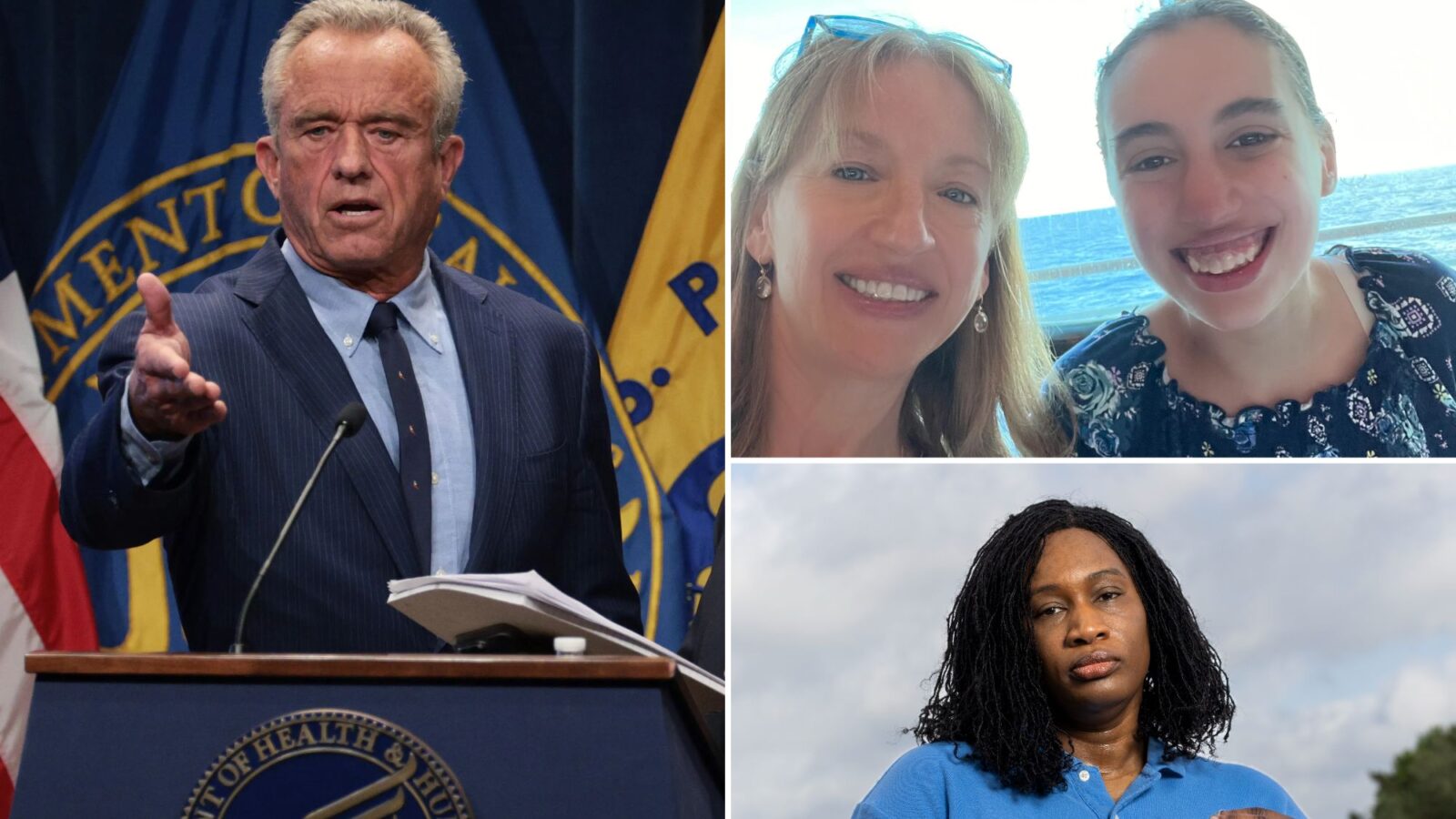
The newly-appointed HHS Secretary said autism “destroys” children in a recent press conference. He declared 1 in 31 children under 8 are diagnosed with autism — up from 1 in 54 in 2016 and 1 in 150 in 2000.
“This is catastrophic for our country,” he said. “Autism destroys families, and more importantly, it destroys our greatest resources, our children.”
During the conference, Secretary Kennedy also definitively claimed that “we know [autism is] from environmental exposure,” contradicting medical experts and the CDC.
While Kennedy’s 1 in 31 figure is accurate and comes from an April CDC study, his claims about environmental factors directly counter the CDC’s own conclusion from that same study.
“I think he’s shown in multiple arenas, even outside of autism, that he is more into stirring up conspiracies as opposed to information that would be helpful to the public,” Dr. Lisa Settles, Clinical director of the Tulane Center for Autism and Related Disorders, told The Post.
Settles has been researching why autism rates have been increasing for the past two decades and says theories espoused by Kennedy — that it is caused by ultrasound scans, mold, pesticides, food chemicals, medicines, air pollution, and water contamination — are baffling.
“Those of us who are professionals in the field did a collective eye roll, because we know… it’s going to take time and effort and energy away from the types of research that we really need right now,” she said. “I don’t even have any idea where he has gotten mold, pesticides, and ultrasounds from.”
Writing for The Post, NYU Langone doctors concurred: “Given its complexity and the wide range of symptoms, it’s likely that multiple factors contribute. This neurodevelopmental difference is something children are born with — it has nothing to do with parenting style, vaccines or foods.”
Experts generally agree that environmental factors which potentially contribute to autism occur in utero, generally in the late first and early second trimester — not after birth, and that such factors are very small in the causation.
Settles says perinatal factors could be a risk factor, including a lack of oxygen at birth. Certain maternal immune system disorders have also been linked to an increased autism risk.
A small association has also been found between autism and paternal age at time of birth, but multiple studies have yielded conflicting results, meaning any association is likely very small.
And there’s no evidence of major changes in these perinatal factors, and therefore Settles disagrees with Kennedy that the recent uptick in diagnoses is primarily due to environmental factors.
Rather, she says, we’ve better defined what autism is and are detecting more kids with it.
And there’s no evidence of major changes in these perinatal factors, and therefore Settles disagrees with Kennedy that the recent uptick in diagnoses is primarily due to environmental factors.
“Pediatricians are screening more. There are structures in place to make sure that we are not missing individuals. There’s more autism acceptance and less of a stigma,” she explained.
Screening initiatives have exploded since the turn of the century — the exact time period that diagnoses shot up.
The CDC launched the “Learn the Signs, Act Early” program in 2004 and also recently unveiled an app that helps parents track whether their children’s development is on track. Meanwhile, the HHS runs a similar initiative, and state Medicaid programs have rolled out regular screening across the country.
A good bulk of the recent jumps in diagnoses occurred in minority communities and underserved neighborhoods, where access to medical resources have expanded in recent years.
“It seems much more likely that it’s an increase in detection and greater awareness and broader definitions,” Catherine Lord, co-chair of the Scientific Research Council of the Child Mind Institute and UCLA professor of psychiatry, told The Post.
Diagnostic criteria has changed dramatically in recent years. A formal autism diagnosis first appeared in the Diagnostic and Statistical Manual of Mental Disorders (DSM) third edition in 1980. The definition of the condition expanded in 1987, 1994, 2000 and in 2013, the DSM fifth edition introduced the “autism spectrum,” which for the first time encompassed “high functioning variations” of autism, including Aspergers.
Kennedy also went on to characterize individuals with autism in extreme terms: “These are kids who will never pay taxes, they’ll never hold a job, they’ll never play baseball, they’ll never write a poem, they’ll never go on a date, many of them will never use a toilet unassisted.”