Δ
Thanks for contacting us. We’ve received your submission.
Carlos Ghosn, once known as the Cost Killer, famously revived failing automotive companies. Then, in 2018, he got arrested in Tokyo.
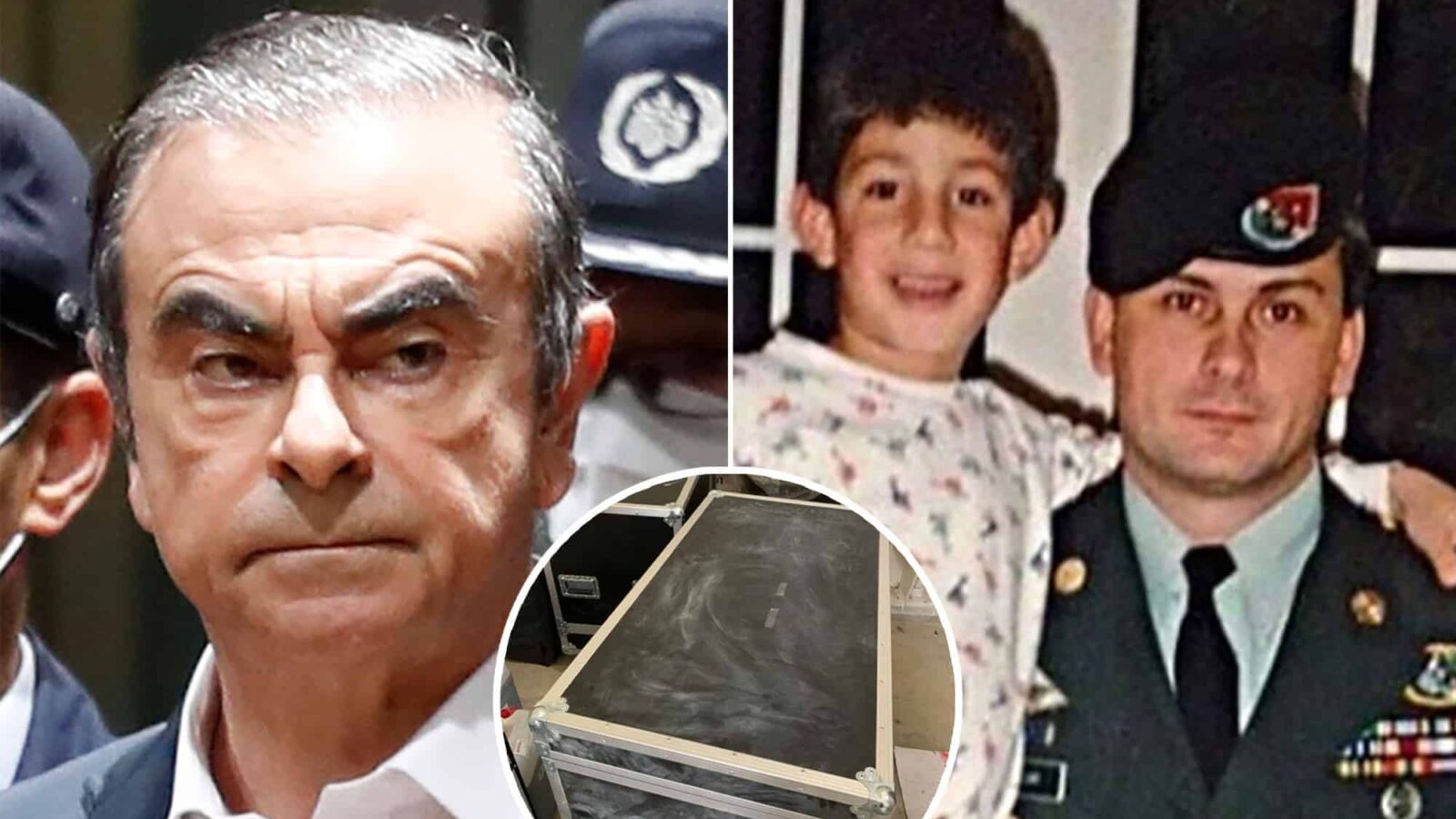
One year later, he might as well have been nicknamed the Escape Artist, being smuggled out of the country stuffed into a music equipment case by a special forces veteran; the improbable plot actually succeeded.
Ultimately, though, the multi-millionaire is alleged to have left his bust-out accomplices high, dry and behind bars.
“Most people will not remember [Ghosn’s business skills],” Sean McLain, co-author of “Boundless,” on which the new documentary “Wanted: The Escape of Carlos Ghosn” (dropping August 25 on Apple TV+) is based, told The Post. “What they will remember is how he smuggled himself out of Japan.”
After pulling a turnaround for the French carmaker Renault and achieving the same for on-the-skids Nissan, Ghosn became a hero in Japan.
He got named one of the men with whom Japanese women would most like to have a baby. He came to look the part: losing his nerdy glasses, getting good haircuts, wearing slim fitting suits.
But, after taking a 50 percent pay cut (bringing his Nissan salary down to some $10 million), Ghosn was accused of financial improprieties.
“If the allegations against him are true, he took $50 million [from Nissan],” said McLain. “Carlos was one of the most prominent auto executives of our generation. He risked his legacy over money.”
Ghosn insisted that Nissan initiated a plot against him. Japanese authorities arrested Ghosn on November 19, 2018, at a Tokyo airport, as he attempted to enter the country.
Lebanese-born and deeply connected, Ghosn went in and out of jail twice, cumulatively spending more than $10 million to cover his bail.
Among the conditions: He was forbidden from communicating with his wife. Security guards monitored his comings and goings.
Lebanese-born and deeply connected, Ghosn went in and out of jail twice, cumulatively spending more than $10 million to cover his bail.
This arrangement did not fly for Ghosn. He feared a guilty verdict or years in litigation limbo.
Through family contacts, Mike Taylor, a former Green Beret turned high school football coach, was enlisted to engineer Ghosn’s escape.
“Mike is genuinely motivated by injustice,” James Jones, director of the documentary, told The Post. “He probably liked the challenge. Getting Japan’s most high-profile criminal out of the country is like climbing Mount Everest.”
Of the escape plan, Taylor said in the documentary, “I needed to find vulnerabilities. I looked at what I could use as a benefit and what could go wrong. If we were going to take him to Lebanon, there were two ways out: by land or sea. But it was December and the seas were rough.”
Air was the remaining option. “[Customs authorities] don’t check bags on the way out of Japan,” said Taylor. “They check them on the way in. That was a vulnerability we could benefit from. I would put him in a box.”
Getting Ghosn out of his surveilled home presented another problem. Cannily, Ghosn discovered that when media came around to check out his situation, minders disappeared for a few days. Prior to taking leave, he planned on calling in the media.
This was conveyed to Taylor via an untraceable burner phone purchased on the black market. Fearing that his home was bugged, Ghosn conversed in the bathroom, with a shower running and a radio blasting.