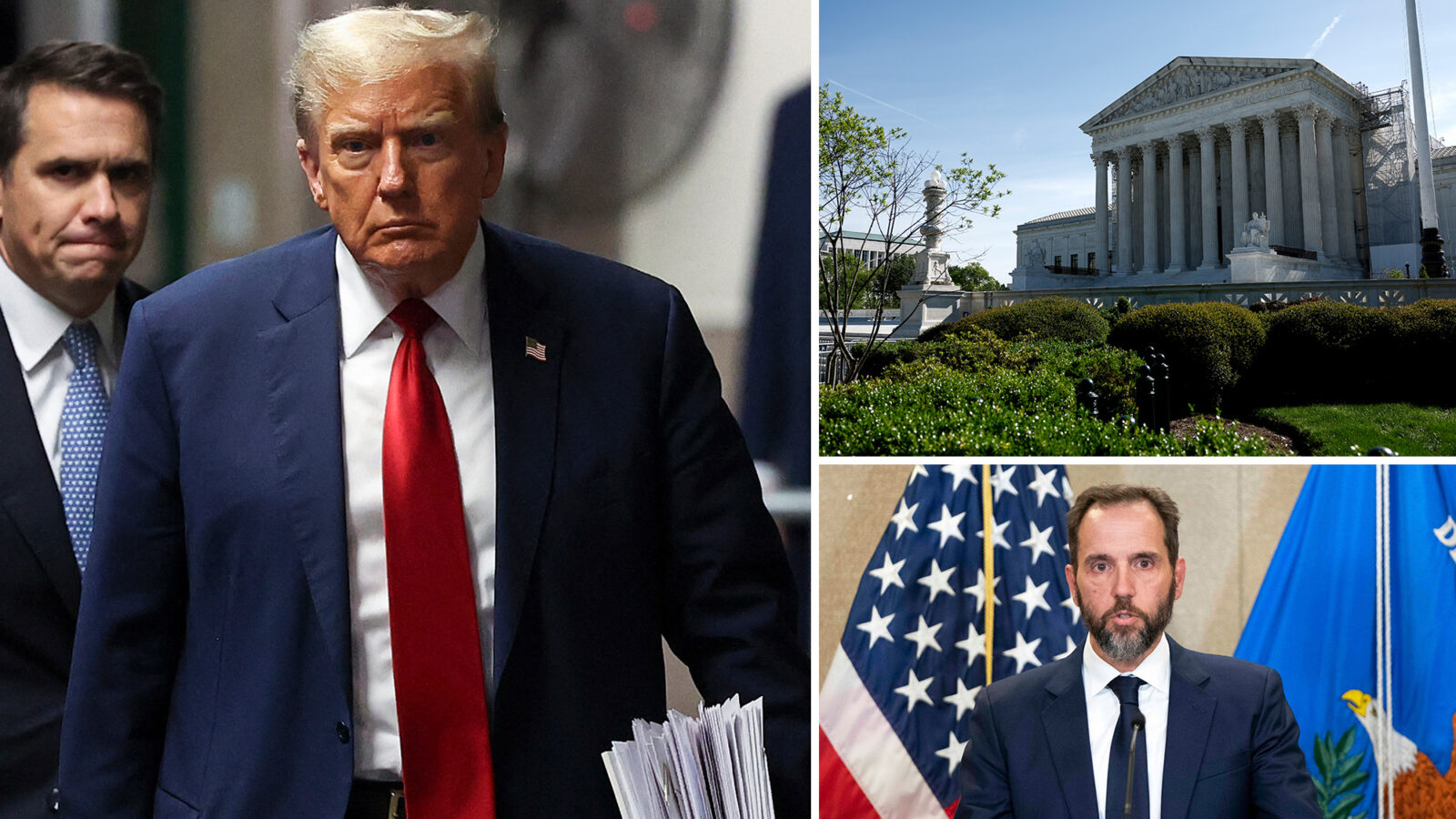
Apart from its effect on the 2024 election, the case carries far-reaching implications that could dramatically alter the scope of presidential power for decades to come.
“WITHOUT PRESIDENTIAL IMMUNITY, IT WOULD BE IMPOSSIBLE FOR A PRESIDENT TO PROPERLY FUNCTION, PUTTING THE UNITED STATES OF AMERICA IN GREAT AND EVERLASTING DANGER!” Trump, 77, warned on Truth Social last week in one of his many posts about the case.
Here’s what you need to know before oral arguments commence Thursday.
On Aug. 1 of last year, special counsel Jack Smith lodged a four-count criminal indictment against Trump accusing him of making “knowingly false” claims of voter fraud and conspiring to prevent the tallying and certification of lawful Electoral College votes.
Lawyers for Trump, however, have argued that the 45th president was merely carrying out his duty as president to safeguard the election.
By that theory, actions such as Trump’s infamous Jan. 2, 2021, phone call with Georgia Secretary of State Brad Raffensperger — in which the president implored election officials to “find” the 11,780 votes needed to reverse his loss — were completely lawful.
“The text of the Impeachment Judgment Clause confirms the original meaning of the Executive Vesting Clause—i.e., that current and former Presidents are immune from criminal prosecution for official acts,” Trump’s attorneys wrote in a March brief.
Smith’s team has vehemently disputed that assertion, saying in their response brief that an “alleged criminal scheme to overturn an election and thwart the peaceful transfer of power to his lawfully elected successor is the paradigmatic example of conduct that should not be immunized, even if other conduct should be.”
Trump’s legal team has warned that if the justices find in Smith’s favor, future presidents would be significantly handicapped in carrying out their duties.
Renato Mariotti, a former Chicago federal prosecutor, is skeptical of that assertion.
“We’ve never had immunity before,” Mariotti told The Post, “and presidents lived under the potential that they can be prosecuted before and the country did just fine.”
A stark example of the ramifications of Trump’s argument was demonstrated in January, when the immunity question was argued before the DC Circuit Court of Appeals.
“Could a president who ordered SEAL Team Six to assassinate a political rival (and is) not impeached, would he be subject to criminal prosecution?” Judge Florence Pan, a Biden appointee, asked at one point.
A stark example of the ramifications of Trump’s argument was demonstrated in January, when the immunity question was argued before the DC Circuit Court of Appeals.
“If he were impeached and convicted first,” Trump lawyer John Sauer replied.
Back in December, US District Judge Tanya Chutkan rejected Trump’s immunity argument, ruling the former president was not entitled to a “lifelong get-out-of-jail-free pass.”
The DC appeals court also ruled against Trump in February, saying his actions after the 2020 election “were, if proven, an unprecedented assault on the structure of our government. He allegedly injected himself into a process in which the President has no role.”
At the end of February, the Supreme Court announced it would take up Trump’s appeal, putting Smith’s case on hold until the immunity question is settled.
Morning Report delivers the latest news, videos, photos and more.
Please provide a valid email address.
By clicking above you agree to the Terms of Use
and Privacy Policy.